

In the global pursuit of carbon neutrality and the rapid electrification of transportation, battery technology stands as the core driver of innovation. For over a decade, ternary lithium polymer batteries (hereafter referred to as “ternary lithium batteries”) have dominated the high-end electric vehicle (EV) and consumer electronics markets, thanks to their balanced performance in energy density, power output, and cycle life. However, as demands for longer driving ranges, faster charging, and enhanced safety intensify, the inherent limitations of liquid electrolyte-based ternary lithium batteries—including thermal runaway risks, limited energy density ceiling, and gradual capacity degradation—have become increasingly prominent. Enter semi-solid-state batteries (SSSBs), a transitional technology between traditional liquid batteries and fully solid-state batteries (FSSBs), which have emerged as the most promising solution to address these pain points. This article conducts a comprehensive comparison between SSSBs and traditional ternary lithium batteries, analyzes their respective strengths and weaknesses, and explores the market prospects of this transformative energy storage technology.
Technical Fundamentals: From Liquid Electrolytes to Hybrid Solid-Liquid Systems
To understand the competitive edge of SSSBs, it is essential to first clarify the technical differences between the two battery technologies. Traditional ternary lithium batteries derive their name from their cathode material—a ternary nickel-cobalt-manganese (NCM) or nickel-cobalt-aluminum (NCA) oxide—and utilize a liquid electrolyte (typically a lithium salt dissolved in organic solvents) to facilitate lithium-ion transfer between the cathode and anode. This liquid-based design, while mature and cost-effective, poses inherent risks: organic electrolytes are flammable and volatile, making thermal runaway a persistent safety hazard when the battery is punctured, overcharged, or exposed to high temperatures. Additionally, the liquid electrolyte limits the use of high-capacity anode materials like lithium metal, capping the energy density at approximately 250-300 Wh/kg for commercial products .
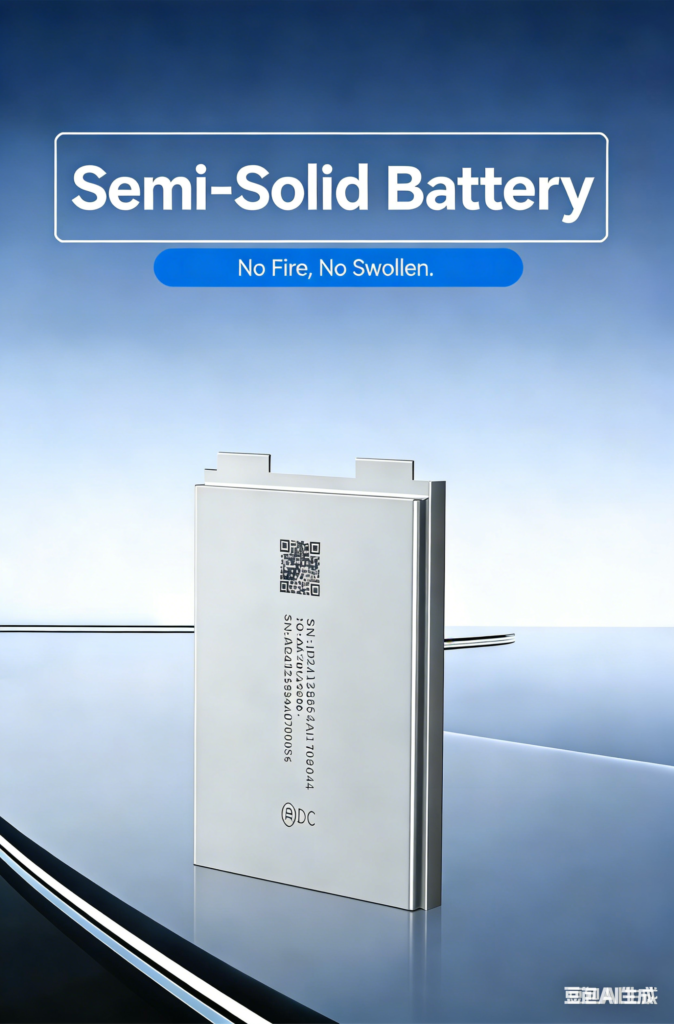
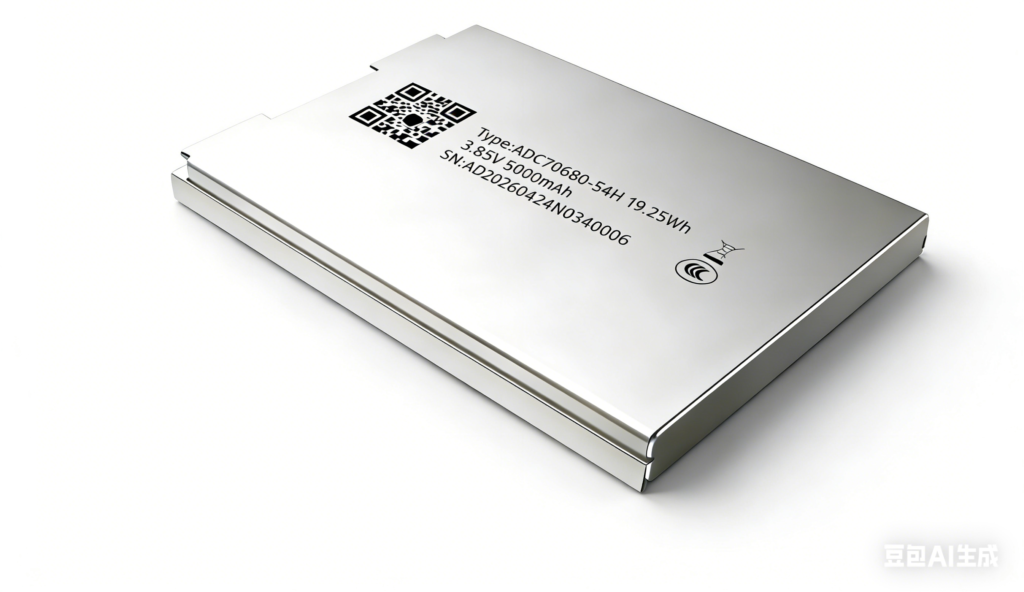
Semi-solid-state batteries, by contrast, represent a paradigm shift in electrolyte design. As the name suggests, they replace 85-95% of the liquid electrolyte with a solid electrolyte (such as sulfide, oxide, or polymer-based materials) while retaining a small fraction of liquid components to ensure ion conductivity . This hybrid structure combines the advantages of solid and liquid systems: the solid electrolyte acts as a physical barrier to prevent lithium dendrite growth (a major cause of short circuits in liquid batteries) and eliminates the risk of electrolyte leakage or combustion. Meanwhile, the residual liquid electrolyte optimizes ion mobility, addressing the low conductivity issue of early full-solid-state prototypes. The anode of SSSBs also undergoes innovation—many adopt silicon-based composites or even thin lithium metal foils, significantly boosting capacity compared to the graphite anodes used in ternary lithium batteries . This technical reconfiguration enables SSSBs to achieve energy densities of 350-400 Wh/kg in commercial products, with laboratory samples exceeding 700 Wh/kg .
Core Performance Comparison: Data-Driven Analysis
1. Energy Density and Driving Range
Energy density, measured in Wh/kg, is the most critical metric for battery performance, directly determining the driving range of EVs and the runtime of portable devices. Traditional ternary lithium batteries have reached a technical plateau, with mainstream commercial products offering 250-300 Wh/kg. High-end variants, such as those used in Tesla Model S Plaid, can reach 300-320 Wh/kg, enabling a maximum range of around 600-700 km on a single charge .
SSSBs shatter this ceiling with a 50% average increase in energy density. For instance, the 70kWh semi-solid-state battery co-developed by SAIC Motor and Qingtao Energy, which powers the MG4 electric vehicle (the world’s first mass-produced SSSB-equipped car), delivers an energy density of 300 Wh/kg in its initial version, with the second-generation model targeting 360 Wh/kg . In the two-wheeler sector, Yadea’s high-end electric motorcycle equipped with Tailan New Energy’s “Safe+” SSSB achieves a range of 112 km, a 118% improvement over ternary lithium battery-equipped counterparts of the same size . For passenger EVs, this translates to a potential driving range of 1,000 km or more—eliminating range anxiety, the top barrier to EV adoption.
2. Safety: Eliminating Thermal Runaway Risks
Safety is the most significant advantage of SSSBs over ternary lithium batteries. The flammable liquid electrolyte in ternary lithium batteries makes them prone to thermal runaway when damaged or abused. According to statistics from the China Automotive Technology and Research Center, 60% of EV fires are caused by battery thermal runaway, often triggered by collisions, punctures, or overcharging .
SSSBs address this flaw at the material level. By replacing most liquid electrolyte with non-flammable solid electrolytes, they inherently resist combustion. The SAIC MG4’s SSSB passed 360-degree needle penetration tests without catching fire or exploding—a feat impossible for traditional ternary lithium batteries . Similarly, Tailan New Energy’s SSSB endured over 100 rigorous safety tests, including high-temperature exposure (80℃) and short-circuit simulations, with no thermal runaway incidents . This safety breakthrough is particularly critical for applications like EVs and medical devices, where battery failure can have life-threatening consequences.
3. Cycle Life and Long-Term Reliability
Cycle life, defined as the number of charge-discharge cycles before the battery retains 80% of its original capacity, directly impacts the total cost of ownership. Traditional ternary lithium batteries typically offer 1,500-2,500 cycles, meaning an EV battery may need replacement after 8-10 years of use (assuming 20,000 km/year) .
SSSBs demonstrate superior durability, with cycle life ranging from 2,000 to 4,000 cycles. After 800 cycles, SSSBs retain over 80% of their capacity, compared to approximately 70% for ternary lithium batteries . This improvement stems from the solid electrolyte’s ability to suppress lithium dendrite formation, which erodes electrode materials in liquid batteries over time. For EV owners, this translates to “battery life matching vehicle life,” reducing long-term maintenance costs. In two-wheeler applications, Yadea’s SSSB-equipped electric motorcycle achieves a cycle life exceeding 1,500 times, meeting the 5-8 year usage requirements of most users .
4. Charging Speed and Low-Temperature Performance
Charging speed and low-temperature adaptability are key user experience metrics. Traditional ternary lithium batteries support 1-2C charging rates (30-60 minutes to full charge) but suffer from significant performance degradation in low temperatures (-10℃ to -20℃), with charging speed dropping by 50% or more and capacity retention falling below 80% .
SSSBs excel in both areas. The hybrid solid-liquid electrolyte enables faster ion transfer, supporting 3-5C high-rate charging. Yadea’s electric motorcycle, for example, can be fully charged in just 12 minutes at 5C rate—on par with refueling a gasoline-powered vehicle . In low-temperature environments, SSSBs outperform ternary lithium batteries by maintaining better conductivity. The SAIC MG4’s SSSB retains 86.2% of its room-temperature capacity at -7℃, a 13.8% improvement over traditional ternary lithium batteries . This makes SSSBs more suitable for cold regions, expanding the geographical scope of EV adoption.
5. Cost: The Primary Barrier to Mass Adoption
Despite their performance advantages, SSSBs currently face a significant cost disadvantage. Traditional ternary lithium batteries have achieved mature economies of scale, with cell costs ranging from 0.6-0.8 yuan/Wh (
0.11/Wh) . In contrast, SSSBs in mass production (2026) cost 1.0-2.5 yuan/Wh (
0.34/Wh), 20%-30% higher than ternary lithium batteries . For EVs, this translates to a price premium of 30,000-50,000 yuan (
6,800) for SSSB-equipped models, limiting them to the high-end market (250,000-400,000 yuan).
The higher cost stems from three factors: first, the expensive raw materials for solid electrolytes (e.g., sulfide-based electrolytes cost 5-10 times more than liquid electrolytes); second, the complex manufacturing process, which requires precision control of electrolyte thickness and electrode-solid electrolyte interface compatibility; and third, the immature supply chain—battery manufacturers like CATL note that building a mature SSSB supply chain will take over three years . However, cost reduction is inevitable with scale expansion: industry forecasts suggest that by 2030, SSSB costs will drop to 0.7-0.9 yuan/Wh (0.12/Wh), approaching that of ternary lithium batteries .
Advantages and Disadvantages of Semi-Solid-State Batteries: A Balanced Assessment
Key Advantages
- Transformative Safety: The elimination of flammable liquid electrolytes fundamentally solves the thermal runaway problem, making SSSBs the safest battery technology for high-power applications. This is a decisive advantage in EVs, where safety concerns have long hindered consumer acceptance.
- Superior Energy Density and Range: With energy density 50% higher than ternary lithium batteries, SSSBs enable EVs to achieve 1,000+ km driving ranges, eliminating range anxiety and matching the convenience of gasoline vehicles.
- Faster Charging and Better Low-Temperature Performance: 3-5C high-rate charging and improved low-temperature adaptability address two critical pain points of traditional EV batteries, enhancing user experience.
- Longer Cycle Life: Extended durability reduces total ownership costs, making EVs more economically viable for both individual and fleet users.
- Compatibility with Existing Production Lines: Unlike fully solid-state batteries, SSSBs can leverage 80% of existing ternary lithium battery production equipment with minor modifications, reducing manufacturers’ investment risks and accelerating commercialization .
Critical Disadvantages
- Higher Initial Cost: The 20%-30% cost premium limits SSSBs to high-end products, delaying mass market penetration.
- Supply Chain Immaturity: The production of solid electrolytes, lithium metal anodes, and other key materials lacks scale, leading to supply constraints and higher prices.
- Interface Resistance Challenges: The interface between solid electrolytes and electrodes can cause higher resistance, affecting charging efficiency and power output. While hybrid electrolytes mitigate this issue, it remains a technical bottleneck for further performance improvement.
- Limited Low-Temperature Superiority: While SSSBs outperform ternary lithium batteries in cold conditions, they still lag behind lithium iron phosphate batteries in ultra-low temperatures (-20℃ and below), restricting their adoption in extreme climates.
- Quality Control Difficulties: Mass production of SSSBs requires precise control of electrolyte thickness and uniformity. Although companies like Gotion High-Tech have achieved a 90% yield rate in pilot production, further improvements are needed for cost-effective large-scale manufacturing .
Market Prospects: From High-End Niche to Mass Adoption
Current Market Status (2025-2026)
The SSSB market is in its early commercialization phase, with initial adoption concentrated in high-end EVs, premium two-wheelers, and specialized equipment. Key milestones include:
- Passenger EVs: SAIC Motor launched the MG4 with SSSB in August 2025, marking the world’s first mass-produced SSSB-equipped car. Honeycomb Energy plans to supply 140Ah SSSBs to BMW MINI’s next-generation models in 2027, with pilot production starting in Q4 2025 . Gotion High-Tech is building a 2GWh SSSB production line to supply Porsche and Xiaomi’s flagship EVs by 2027 .
- Two-Wheelers: Yadea launched the world’s first SSSB-equipped high-end electric motorcycle in 2026, with Tailan New Energy’s 0.2GWh production line already operational and 2GWh capacity under expansion .
- Specialized Applications: EVE Energy’s “Longquan No.2” SSSB (300Wh/kg) is targeted at humanoid robots, low-altitude aircraft, and AI equipment, with a 500,000-cell annual production capacity .
Market Growth Forecasts
According to CITIC Securities, the global solid-state battery market (including SSSBs and FSSBs) will experience explosive growth, with shipments reaching 705GWh by 2030—representing a compound annual growth rate (CAGR) of 183% from 2025 to 2030. Of this, SSSBs will account for 494GWh (70%), while FSSBs will contribute 211GWh (30%) . The Chinese market will lead this expansion, driven by strong domestic demand for EVs and supportive policies for advanced battery technologies.
Key Application Segments
- New Energy Vehicles: The largest application segment, with SSSBs gradually penetrating mid-to-high-end EVs. By 2030, SSSBs are expected to power 30% of global EVs, particularly premium models from BMW, Porsche, Xiaomi, and domestic Chinese brands.
- Two-Wheelers: A fast-growing segment, with SSSBs addressing range and charging pain points in high-end electric motorcycles and scooters. Yadea, Niu, and other leading brands plan to launch SSSB-equipped models by 2027, targeting the 10,000+ yuan price range.
- Consumer Electronics: SSSBs will enable thinner, lighter smartphones, laptops, and wearables with longer battery life. By 2028, top-tier smartphones from Apple, Samsung, and Xiaomi may adopt SSSBs, offering 2-day battery life and 30-minute fast charging.
- Energy Storage: SSSBs’ long cycle life and safety make them suitable for stationary energy storage systems (ESS), particularly in harsh environments like deserts or cold regions. Pilot projects are already underway in China and Europe, with large-scale deployment expected after 2028.
Global Competitive Landscape
The global SSSB race is dominated by three regional players:
- China: Leads in commercialization with mass-produced models (SAIC MG4, Yadea electric motorcycles) and aggressive capacity expansion. Key players include CATL (2027 small-scale production plan), Gotion High-Tech (2GWh line under construction), Honeycomb Energy (BMW supply deal), and Tailan New Energy (two-wheeler leader) .
- Japan: Focuses on FSSB R&D but lags in SSSB commercialization. Panasonic Energy plans to ship FSSB samples in 2026, while Toyota targets 2027 for FSSB-equipped EVs .
- Europe/US: Adopts a “partnership model,” with European automakers (BMW, Volkswagen) collaborating with battery startups (QuantumScape, Solid Power) to develop SSSBs. Mass production is expected around 2028 .
Future Outlook: Toward Fully Solid-State Batteries
SSSBs represent a critical transitional technology, bridging the gap between traditional liquid batteries and FSSBs. Over the next decade, the technology will evolve along three key paths:
- Cost Reduction: As production scales and supply chains mature, SSSB costs will decline to match ternary lithium batteries by 2030, enabling mass adoption in mid-range EVs and consumer electronics.
- Performance Enhancement: Energy density will rise from 350-400 Wh/kg (current) to 450-500 Wh/kg by 2028, enabling EV ranges of 1,200+ km and further reducing charging time to 10 minutes or less.
- Transition to Fully Solid-State: SSSBs will pave the way for FSSBs, which eliminate liquid electrolytes entirely. With laboratory energy densities exceeding 700 Wh/kg, FSSBs will enable EV ranges of 1,500+ km and revolutionize aviation and space applications. Chinese manufacturers (BYD, CATL) and Japanese firms (Toyota, Panasonic) target 2030 for FSSB commercialization .
Policy support will accelerate this transition. Governments worldwide are investing in solid-state battery R&D: China’s “14th Five-Year Plan” allocates $10 billion to advanced battery technologies, while the EU’s Green Deal includes subsidies for SSSB production. These policies, combined with growing consumer demand for safer, longer-range EVs, will drive the SSSB market to new heights.
Conclusion
Semi-solid-state batteries represent a milestone in the evolution of energy storage technology, addressing the core limitations of traditional ternary lithium batteries while maintaining commercial viability. Their superior safety, higher energy density, faster charging, and longer cycle life position them as the preferred power source for the next generation of electric vehicles, two-wheelers, and consumer electronics. While cost and supply chain challenges currently restrict them to high-end markets, rapid technological advancements and scaling production will drive cost reduction, enabling mass adoption by 2030.
The rise of SSSBs is not just a technological upgrade—it is a catalyst for the global energy transition. By making electric vehicles safer, more convenient, and more affordable, SSSBs will accelerate the shift away from fossil fuels and toward a sustainable future. As the industry moves from SSSBs to FSSBs, the boundary between science fiction and reality will blur, unlocking new possibilities for transportation, energy storage, and beyond. For consumers, this means a world with longer-lasting devices, zero-emission vehicles with unlimited range, and a safer, greener planet. For manufacturers and investors, it represents a trillion-dollar market opportunity—one that will define the future of mobility and energy.
In the global pursuit of carbon neutrality and the rapid electrification of transportation, battery technology stands as the core driver of innovation. For over a decade, ternary lithium polymer batteries (hereafter referred to as “ternary lithium batteries”) have dominated the high-end electric vehicle (EV) and consumer electronics markets, thanks to their balanced performance in energy density, power output, and cycle life. However, as demands for longer driving ranges, faster charging, and enhanced safety intensify, the inherent limitations of liquid electrolyte-based ternary lithium batteries—including thermal runaway risks, limited energy density ceiling, and gradual capacity degradation—have become increasingly prominent. Enter semi-solid-state batteries (SSSBs), a transitional technology between traditional liquid batteries and fully solid-state batteries (FSSBs), which have emerged as the most promising solution to address these pain points. This article conducts a comprehensive comparison between SSSBs and traditional ternary lithium batteries, analyzes their respective strengths and weaknesses, and explores the market prospects of this transformative energy storage technology.
Technical Fundamentals: From Liquid Electrolytes to Hybrid Solid-Liquid Systems
To understand the competitive edge of SSSBs, it is essential to first clarify the technical differences between the two battery technologies. Traditional ternary lithium batteries derive their name from their cathode material—a ternary nickel-cobalt-manganese (NCM) or nickel-cobalt-aluminum (NCA) oxide—and utilize a liquid electrolyte (typically a lithium salt dissolved in organic solvents) to facilitate lithium-ion transfer between the cathode and anode. This liquid-based design, while mature and cost-effective, poses inherent risks: organic electrolytes are flammable and volatile, making thermal runaway a persistent safety hazard when the battery is punctured, overcharged, or exposed to high temperatures. Additionally, the liquid electrolyte limits the use of high-capacity anode materials like lithium metal, capping the energy density at approximately 250-300 Wh/kg for commercial products .
Semi-solid-state batteries, by contrast, represent a paradigm shift in electrolyte design. As the name suggests, they replace 85-95% of the liquid electrolyte with a solid electrolyte (such as sulfide, oxide, or polymer-based materials) while retaining a small fraction of liquid components to ensure ion conductivity . This hybrid structure combines the advantages of solid and liquid systems: the solid electrolyte acts as a physical barrier to prevent lithium dendrite growth (a major cause of short circuits in liquid batteries) and eliminates the risk of electrolyte leakage or combustion. Meanwhile, the residual liquid electrolyte optimizes ion mobility, addressing the low conductivity issue of early full-solid-state prototypes. The anode of SSSBs also undergoes innovation—many adopt silicon-based composites or even thin lithium metal foils, significantly boosting capacity compared to the graphite anodes used in ternary lithium batteries . This technical reconfiguration enables SSSBs to achieve energy densities of 350-400 Wh/kg in commercial products, with laboratory samples exceeding 700 Wh/kg .
Core Performance Comparison: Data-Driven Analysis
1. Energy Density and Driving Range
Energy density, measured in Wh/kg, is the most critical metric for battery performance, directly determining the driving range of EVs and the runtime of portable devices. Traditional ternary lithium batteries have reached a technical plateau, with mainstream commercial products offering 250-300 Wh/kg. High-end variants, such as those used in Tesla Model S Plaid, can reach 300-320 Wh/kg, enabling a maximum range of around 600-700 km on a single charge .
SSSBs shatter this ceiling with a 50% average increase in energy density. For instance, the 70kWh semi-solid-state battery co-developed by SAIC Motor and Qingtao Energy, which powers the MG4 electric vehicle (the world’s first mass-produced SSSB-equipped car), delivers an energy density of 300 Wh/kg in its initial version, with the second-generation model targeting 360 Wh/kg . In the two-wheeler sector, Yadea’s high-end electric motorcycle equipped with Tailan New Energy’s “Safe+” SSSB achieves a range of 112 km, a 118% improvement over ternary lithium battery-equipped counterparts of the same size . For passenger EVs, this translates to a potential driving range of 1,000 km or more—eliminating range anxiety, the top barrier to EV adoption.
2. Safety: Eliminating Thermal Runaway Risks
Safety is the most significant advantage of SSSBs over ternary lithium batteries. The flammable liquid electrolyte in ternary lithium batteries makes them prone to thermal runaway when damaged or abused. According to statistics from the China Automotive Technology and Research Center, 60% of EV fires are caused by battery thermal runaway, often triggered by collisions, punctures, or overcharging .
SSSBs address this flaw at the material level. By replacing most liquid electrolyte with non-flammable solid electrolytes, they inherently resist combustion. The SAIC MG4’s SSSB passed 360-degree needle penetration tests without catching fire or exploding—a feat impossible for traditional ternary lithium batteries . Similarly, Tailan New Energy’s SSSB endured over 100 rigorous safety tests, including high-temperature exposure (80℃) and short-circuit simulations, with no thermal runaway incidents . This safety breakthrough is particularly critical for applications like EVs and medical devices, where battery failure can have life-threatening consequences.
3. Cycle Life and Long-Term Reliability
Cycle life, defined as the number of charge-discharge cycles before the battery retains 80% of its original capacity, directly impacts the total cost of ownership. Traditional ternary lithium batteries typically offer 1,500-2,500 cycles, meaning an EV battery may need replacement after 8-10 years of use (assuming 20,000 km/year) .
SSSBs demonstrate superior durability, with cycle life ranging from 2,000 to 4,000 cycles. After 800 cycles, SSSBs retain over 80% of their capacity, compared to approximately 70% for ternary lithium batteries . This improvement stems from the solid electrolyte’s ability to suppress lithium dendrite formation, which erodes electrode materials in liquid batteries over time. For EV owners, this translates to “battery life matching vehicle life,” reducing long-term maintenance costs. In two-wheeler applications, Yadea’s SSSB-equipped electric motorcycle achieves a cycle life exceeding 1,500 times, meeting the 5-8 year usage requirements of most users .
4. Charging Speed and Low-Temperature Performance
Charging speed and low-temperature adaptability are key user experience metrics. Traditional ternary lithium batteries support 1-2C charging rates (30-60 minutes to full charge) but suffer from significant performance degradation in low temperatures (-10℃ to -20℃), with charging speed dropping by 50% or more and capacity retention falling below 80% .
SSSBs excel in both areas. The hybrid solid-liquid electrolyte enables faster ion transfer, supporting 3-5C high-rate charging. Yadea’s electric motorcycle, for example, can be fully charged in just 12 minutes at 5C rate—on par with refueling a gasoline-powered vehicle . In low-temperature environments, SSSBs outperform ternary lithium batteries by maintaining better conductivity. The SAIC MG4’s SSSB retains 86.2% of its room-temperature capacity at -7℃, a 13.8% improvement over traditional ternary lithium batteries . This makes SSSBs more suitable for cold regions, expanding the geographical scope of EV adoption.
5. Cost: The Primary Barrier to Mass Adoption
Despite their performance advantages, SSSBs currently face a significant cost disadvantage. Traditional ternary lithium batteries have achieved mature economies of scale, with cell costs ranging from 0.6-0.8 yuan/Wh (
0.11/Wh) . In contrast, SSSBs in mass production (2026) cost 1.0-2.5 yuan/Wh (
0.34/Wh), 20%-30% higher than ternary lithium batteries . For EVs, this translates to a price premium of 30,000-50,000 yuan (
6,800) for SSSB-equipped models, limiting them to the high-end market (250,000-400,000 yuan).
The higher cost stems from three factors: first, the expensive raw materials for solid electrolytes (e.g., sulfide-based electrolytes cost 5-10 times more than liquid electrolytes); second, the complex manufacturing process, which requires precision control of electrolyte thickness and electrode-solid electrolyte interface compatibility; and third, the immature supply chain—battery manufacturers like CATL note that building a mature SSSB supply chain will take over three years . However, cost reduction is inevitable with scale expansion: industry forecasts suggest that by 2030, SSSB costs will drop to 0.7-0.9 yuan/Wh (
0.12/Wh), approaching that of ternary lithium batteries .
Advantages and Disadvantages of Semi-Solid-State Batteries: A Balanced Assessment
Key Advantages
- Transformative Safety: The elimination of flammable liquid electrolytes fundamentally solves the thermal runaway problem, making SSSBs the safest battery technology for high-power applications. This is a decisive advantage in EVs, where safety concerns have long hindered consumer acceptance.
- Superior Energy Density and Range: With energy density 50% higher than ternary lithium batteries, SSSBs enable EVs to achieve 1,000+ km driving ranges, eliminating range anxiety and matching the convenience of gasoline vehicles.
- Faster Charging and Better Low-Temperature Performance: 3-5C high-rate charging and improved low-temperature adaptability address two critical pain points of traditional EV batteries, enhancing user experience.
- Longer Cycle Life: Extended durability reduces total ownership costs, making EVs more economically viable for both individual and fleet users.
- Compatibility with Existing Production Lines: Unlike fully solid-state batteries, SSSBs can leverage 80% of existing ternary lithium battery production equipment with minor modifications, reducing manufacturers’ investment risks and accelerating commercialization .
Critical Disadvantages
- Higher Initial Cost: The 20%-30% cost premium limits SSSBs to high-end products, delaying mass market penetration.
- Supply Chain Immaturity: The production of solid electrolytes, lithium metal anodes, and other key materials lacks scale, leading to supply constraints and higher prices.
- Interface Resistance Challenges: The interface between solid electrolytes and electrodes can cause higher resistance, affecting charging efficiency and power output. While hybrid electrolytes mitigate this issue, it remains a technical bottleneck for further performance improvement.
- Limited Low-Temperature Superiority: While SSSBs outperform ternary lithium batteries in cold conditions, they still lag behind lithium iron phosphate batteries in ultra-low temperatures (-20℃ and below), restricting their adoption in extreme climates.
- Quality Control Difficulties: Mass production of SSSBs requires precise control of electrolyte thickness and uniformity. Although companies like Gotion High-Tech have achieved a 90% yield rate in pilot production, further improvements are needed for cost-effective large-scale manufacturing .
Market Prospects: From High-End Niche to Mass Adoption
Current Market Status (2025-2026)
The SSSB market is in its early commercialization phase, with initial adoption concentrated in high-end EVs, premium two-wheelers, and specialized equipment. Key milestones include:
- Passenger EVs: SAIC Motor launched the MG4 with SSSB in August 2025, marking the world’s first mass-produced SSSB-equipped car. Honeycomb Energy plans to supply 140Ah SSSBs to BMW MINI’s next-generation models in 2027, with pilot production starting in Q4 2025 . Gotion High-Tech is building a 2GWh SSSB production line to supply Porsche and Xiaomi’s flagship EVs by 2027 .
- Two-Wheelers: Yadea launched the world’s first SSSB-equipped high-end electric motorcycle in 2026, with Tailan New Energy’s 0.2GWh production line already operational and 2GWh capacity under expansion .
- Specialized Applications: EVE Energy’s “Longquan No.2” SSSB (300Wh/kg) is targeted at humanoid robots, low-altitude aircraft, and AI equipment, with a 500,000-cell annual production capacity .
Market Growth Forecasts
According to CITIC Securities, the global solid-state battery market (including SSSBs and FSSBs) will experience explosive growth, with shipments reaching 705GWh by 2030—representing a compound annual growth rate (CAGR) of 183% from 2025 to 2030. Of this, SSSBs will account for 494GWh (70%), while FSSBs will contribute 211GWh (30%) . The Chinese market will lead this expansion, driven by strong domestic demand for EVs and supportive policies for advanced battery technologies.
Key Application Segments
- New Energy Vehicles: The largest application segment, with SSSBs gradually penetrating mid-to-high-end EVs. By 2030, SSSBs are expected to power 30% of global EVs, particularly premium models from BMW, Porsche, Xiaomi, and domestic Chinese brands.
- Two-Wheelers: A fast-growing segment, with SSSBs addressing range and charging pain points in high-end electric motorcycles and scooters. Yadea, Niu, and other leading brands plan to launch SSSB-equipped models by 2027, targeting the 10,000+ yuan price range.
- Consumer Electronics: SSSBs will enable thinner, lighter smartphones, laptops, and wearables with longer battery life. By 2028, top-tier smartphones from Apple, Samsung, and Xiaomi may adopt SSSBs, offering 2-day battery life and 30-minute fast charging.
- Energy Storage: SSSBs’ long cycle life and safety make them suitable for stationary energy storage systems (ESS), particularly in harsh environments like deserts or cold regions. Pilot projects are already underway in China and Europe, with large-scale deployment expected after 2028.
Global Competitive Landscape
The global SSSB race is dominated by three regional players:
- China: Leads in commercialization with mass-produced models (SAIC MG4, Yadea electric motorcycles) and aggressive capacity expansion. Key players include CATL (2027 small-scale production plan), Gotion High-Tech (2GWh line under construction), Honeycomb Energy (BMW supply deal), and Tailan New Energy (two-wheeler leader) .
- Japan: Focuses on FSSB R&D but lags in SSSB commercialization. Panasonic Energy plans to ship FSSB samples in 2026, while Toyota targets 2027 for FSSB-equipped EVs .
- Europe/US: Adopts a “partnership model,” with European automakers (BMW, Volkswagen) collaborating with battery startups (QuantumScape, Solid Power) to develop SSSBs. Mass production is expected around 2028 .
Future Outlook: Toward Fully Solid-State Batteries
SSSBs represent a critical transitional technology, bridging the gap between traditional liquid batteries and FSSBs. Over the next decade, the technology will evolve along three key paths:
- Cost Reduction: As production scales and supply chains mature, SSSB costs will decline to match ternary lithium batteries by 2030, enabling mass adoption in mid-range EVs and consumer electronics.
- Performance Enhancement: Energy density will rise from 350-400 Wh/kg (current) to 450-500 Wh/kg by 2028, enabling EV ranges of 1,200+ km and further reducing charging time to 10 minutes or less.
- Transition to Fully Solid-State: SSSBs will pave the way for FSSBs, which eliminate liquid electrolytes entirely. With laboratory energy densities exceeding 700 Wh/kg, FSSBs will enable EV ranges of 1,500+ km and revolutionize aviation and space applications. Chinese manufacturers (BYD, CATL) and Japanese firms (Toyota, Panasonic) target 2030 for FSSB commercialization .
Policy support will accelerate this transition. Governments worldwide are investing in solid-state battery R&D: China’s “14th Five-Year Plan” allocates $10 billion to advanced battery technologies, while the EU’s Green Deal includes subsidies for SSSB production. These policies, combined with growing consumer demand for safer, longer-range EVs, will drive the SSSB market to new heights.
Conclusion
Semi-solid-state batteries represent a milestone in the evolution of energy storage technology, addressing the core limitations of traditional ternary lithium batteries while maintaining commercial viability. Their superior safety, higher energy density, faster charging, and longer cycle life position them as the preferred power source for the next generation of electric vehicles, two-wheelers, and consumer electronics. While cost and supply chain challenges currently restrict them to high-end markets, rapid technological advancements and scaling production will drive cost reduction, enabling mass adoption by 2030.
The rise of SSSBs is not just a technological upgrade—it is a catalyst for the global energy transition. By making electric vehicles safer, more convenient, and more affordable, SSSBs will accelerate the shift away from fossil fuels and toward a sustainable future. As the industry moves from SSSBs to FSSBs, the boundary between science fiction and reality will blur, unlocking new possibilities for transportation, energy storage, and beyond. For consumers, this means a world with longer-lasting devices, zero-emission vehicles with unlimited range, and a safer, greener planet. For manufacturers and investors, it represents a trillion-dollar market opportunity—one that will define the future of mobility and energy.