

In the fast-evolving landscape of consumer electronics, wireless charging has transitioned from a novelty to a necessity, with the Qi standard standing as the unshakable backbone of this technological shift. Since the launch of Qi 1.0 in 2010, the Wireless Power Consortium (WPC) has continuously pushed the boundaries of what’s possible, addressing pain points like sluggish charging speeds, compatibility chaos, and safety concerns. Now, with the arrival of Qi 2.2 (branded as Qi2 25W), the industry witnesses a transformative leap that redefines the potential of wireless power delivery. This article delves into the technical evolution from Qi 1 to Qi 2 and finally to Qi 2.2, highlighting how the latest standard’s 25W breakthrough marks a pivotal moment in wireless charging history.
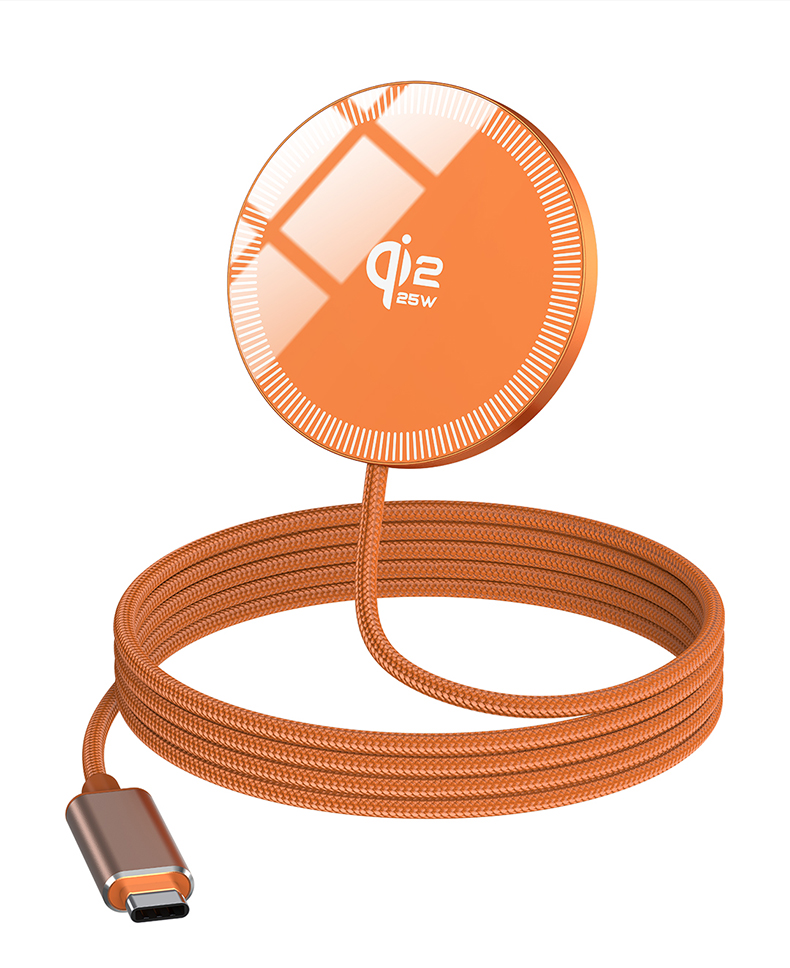
The Evolutionary Journey: From Qi 1 to Qi 2.2
To appreciate the revolutionary nature of Qi 2.2, it’s essential to trace the evolutionary path of the Qi standard. The journey began in July 2010 with Qi 1.0, a groundbreaking initiative that introduced 5W wireless charging to the masses. This initial version laid the foundational framework for inductive power transfer but came with significant limitations: limited design flexibility for transmitters, no standardized alignment mechanism, and sluggish charging speeds that made it a secondary option for most users. As consumer demand for faster wireless charging grew, the WPC iterated with Qi 1.2 in October 2015, boosting the maximum power output to 15W through the Extended Power Profile (EPP) and enhancing foreign object detection (FOD) sensitivity. The 1.3 update in 2021 further refined the specification with restructured documentation and improved authentication protocols, but the core user experience remained hampered by alignment issues and inconsistent performance across devices.
The true inflection point came in April 2023 with the launch of Qi 2.0, which introduced the game-changing Magnetic Power Profile (MPP). By integrating magnetic alignment technology, Qi 2.0 eliminated the frustrating “sweet spot” problem plaguing earlier versions—devices now snap into perfect alignment with chargers, reducing energy loss caused by misalignment by up to 30% . Operating at a fixed 360 kHz frequency, Qi 2.0 maintained the 15W power ceiling but delivered more stable and efficient charging, laying the groundwork for a unified 磁吸 (magnetic) ecosystem. The subsequent Qi 2.1 update in September 2024 expanded compatibility to include magnetic accessory covers and movable coil transmitters for automotive applications, addressing mechanical obstructions like protruding camera modules . However, it wasn’t until December 2024 that the WPC unveiled Qi 2.2, a milestone release that shattered the 15W barrier with its 25W MPP25 power configuration, marking a 67% power increase over Qi 2 .
Core Advantages of Qi 2.2: A Comprehensive Comparison
1. Power and Charging Speed: From Incremental Gain to Transformative Leap
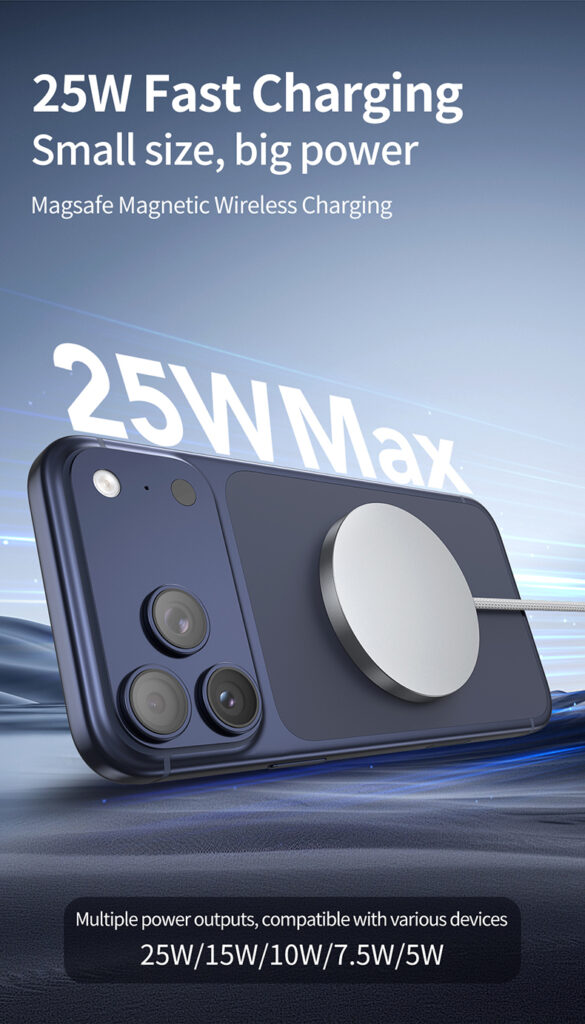
The most striking difference between Qi 2.2 and its predecessors lies in power delivery. Qi 1.x topped out at 15W (EPP), while Qi 2.0/2.1 retained this limit despite efficiency improvements. Qi 2.2’s MPP25 configuration pushes the envelope to 25W, a leap that bridges the gap between wireless and wired charging. Real-world tests with the iPhone 16 Pro illustrate this impact: while Qi 2 takes approximately 90 minutes to fully charge the device, Qi 2.2 slashes this time to under 60 minutes—nearing the speed of mainstream wired fast chargers . More importantly, the 25W power isn’t just a numerical upgrade; it optimizes the charging curve by delivering sustained high power during the critical first 30 minutes. Users can expect to recharge 50% of their battery in just half an hour with Qi 2.2, compared to 35-40% with Qi 2 and a mere 20-25% with Qi 1.3 .
This power breakthrough is enabled by three key technological innovations: dynamic power regulation chips that adjust output in real time based on temperature and resistance, high-frequency resonant circuits that minimize electromagnetic scattering loss, and dual-coil synergistic architecture that prevents overheating by alternating workloads . Unlike Qi 1’s one-size-fits-all power delivery and Qi 2’s static 15W output, Qi 2.2’s adaptive system ensures maximum power transfer without compromising safety—a balance that eluded earlier standards.
2. Thermal Management: Safety Redefined at High Power
High power often translates to excessive heat, a longstanding Achilles’ heel of wireless charging. Qi 1.x and Qi 2 lacked mandatory thermal standards, leading to cases of overheating, battery degradation, and even safety hazards. Qi 2.2 addresses this by introducing a strict 40℃ surface temperature ceiling—equivalent to the warmth of lukewarm water—mandated at the protocol level . This threshold, validated through extensive laboratory testing, sits well below the 60℃ thermal runaway point of lithium-ion batteries, ensuring long-term battery health.
To enforce this standard, Qi 2.2 employs a three-layer protection system: an array of 5-8 NTC thermistors with ±0.5℃ precision that scan for hotspots every 0.1 seconds, a millisecond-level power cutoff mechanism that halts energy transfer in 20ms (15 times faster than a human blink) if temperatures approach the limit, and a lanthanide oxide thermal conductive coating that accelerates heat diffusion threefold . In practical tests, an iPhone 16 Pro charged with a Qi 2.2-certified third-party module reached a peak power of 24.22W while maintaining a surface temperature of just 38.7℃—a stark contrast to Qi 2’s 18.14W output with similar temperatures . This “cool fast charging” capability is a game-changer, eliminating the need for users to choose between speed and safety.
3. Compatibility and Ecosystem Unity: Ending the Fragmentation
One of the biggest frustrations with wireless charging has been ecosystem fragmentation. Qi 1.x suffered from inconsistent compatibility across brands, with proprietary protocols locking users into specific chargers. Qi 2 improved this with the MPP standard but still faced limitations with non-magnetic devices. Qi 2.2 takes compatibility to new heights by maintaining backward compatibility with Qi 2.0/2.1 and Qi 1.x devices while unifying the ecosystem under an open communication stack . This means any Qi2.2-certified charger can deliver optimal power to supported devices, regardless of brand—no more “brand tax” for fast wireless charging.
The scale of the Qi 2 ecosystem underscores this unity. As of November 2025, there are 2,554 Qi2-certified products globally, including 101 smartphones from Apple, Samsung, Google, and HMD . Apple’s iPhone 16 series (excluding the 16e) is fully Qi 2.2-certified, and the upcoming iPhone 17 series has been 实测 (tested) to support 25W wireless charging despite not yet receiving official certification . Samsung leads the Android 阵营 (camp) with 62% of Qi2-certified phones, including the Galaxy S25 and Z Fold7 series . Third-party accessory makers have also embraced the standard, with Belkin, Anker, Baseus, and UGREEN offering a wide range of Qi2.2-certified chargers, phone cases, and car mounts . This ecosystem expansion has driven down accessory prices by 40% compared to Qi 1-era products, making high-quality wireless charging more accessible .
4. Technical Architecture: Precision and Efficiency Optimized
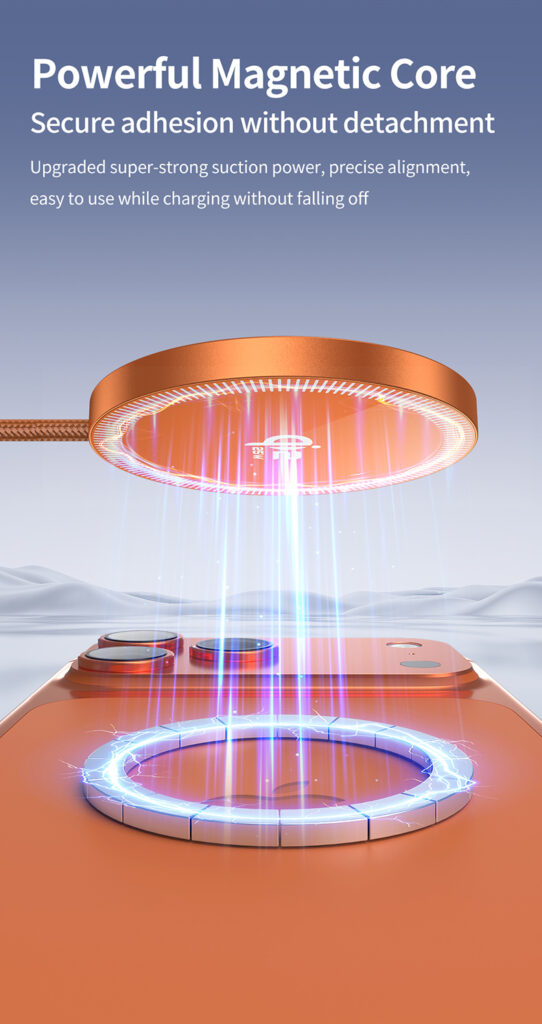
Beneath the power boost, Qi 2.2 refines the technical architecture inherited from Qi 2. The magnetic alignment system (MPP) remains a cornerstone, but Qi 2.2 enhances alignment precision to ±0.5mm—critical for maintaining efficient power transfer at 25W . This precision eliminates the energy loss caused by even minor misalignment, a flaw that plagued Qi 1’s coil-based system. Qi 2.2 also introduces gain measurement and linearization algorithms to optimize power control, ensuring seamless adaptation to different USB-C power adapters .
Another key improvement is the enhanced Foreign Object Detection (FOD) system. Building on Qi 1.2’s basic FOD and Qi 2’s improved sensitivity, Qi 2.2 boosts metal object detection accuracy by 90%, preventing overheating from coins, keys, or other metallic debris . For automotive applications, Qi 2.2 inherits Qi 2.1’s Automatic Alignment Profile (AAP), allowing transmitters with movable coils to track devices as they shift—ideal for in-car charging . These architectural refinements ensure that the 25W power boost is not just a raw increase but a sustainable, efficient upgrade.
The Industry Impact of Qi 2.2’s 25W Revolution
Qi 2.2’s arrival signals a paradigm shift in how we perceive wireless charging. For years, wireless charging was dismissed as a convenient but slow alternative to wired charging. With 25W closing the speed gap, Qi 2.2 positions wireless charging as a viable primary charging method. This has far-reaching implications for device design: manufacturers can now reduce reliance on physical charging ports, enabling sleeker, more water-resistant devices. The iPhone 16’s Qi 2.2 support, for example, hints at a future where Lightning or USB-C ports may become optional.
The ecosystem expansion is equally transformative. As of March 2026, over 110 smartphone models support wireless charging, with 40+ Qi2-certified devices . The charger market is also evolving, with brands like Baseus and Zens leading the Qi2.2 charger segment, offering products that integrate wireless charging with multi-port wired solutions . Beyond smartphones, Qi 2.2 is penetrating new sectors: automotive manufacturers are integrating 25W Qi2.2 modules into center consoles, while medical device makers are leveraging the low-temperature operation for sterile charging of 体温计 and insulin pumps .
Cost reduction is another critical impact. The open Qi 2.2 standard has fostered competition among accessory makers, driving down the price of 25W wireless chargers to 50—comparable to mid-range Qi 2 chargers . This affordability, combined with widespread device support, is accelerating consumer adoption. A 2025 survey by ChargerLAB found that 68% of smartphone buyers now consider wireless charging speed a key purchasing factor, up from 42% in 2023 .
Future Outlook: Beyond 25W
Qi 2.2 is not the end of the journey. The WPC has already initiated pre-research on Qi 3, targeting a 50W power ceiling and spatial adaptive charging—technology that would create a “wireless energy field” allowing devices to charge without precise placement . Apple’s iPhone 17 Pro is rumored to support 50W wireless charging, while Android flagships like the Xiaomi 15 Ultra and vivo X200 Ultra are expected to follow suit in 2026 . These advancements will further blur the line between wired and wireless charging, potentially making physical ports obsolete in high-end devices.
Another emerging trend is the integration of Qi 2.2 into smart home and office furniture. Brands like Twelve South and MGCTECH are developing desk pads and lamp bases with built-in 25W Qi2.2 charging, transforming everyday objects into power hubs . For the automotive industry, Qi 2.2’s movable coil technology will enable more flexible in-car charging solutions, accommodating different device sizes and positions.
Conclusion
Qi 2.2 represents a watershed moment in the evolution of wireless charging. By boosting power to 25W while maintaining strict safety standards, enhancing compatibility, and refining technical efficiency, it addresses the core pain points that held back earlier Qi standards. The comparison with Qi 1 and Qi 2 reveals a clear trajectory: from a niche convenience to a mainstream, high-performance charging solution. With widespread adoption by major device makers and a growing ecosystem of affordable accessories, Qi 2.2 is poised to make 25W wireless charging the new norm.
As we stand on the cusp of the 50W era, Qi 2.2’s legacy will be its role in legitimizing wireless charging as a primary power source. It has transformed wireless charging from a “nice-to-have” feature into an essential part of the consumer electronics experience, proving that convenience and speed can coexist. For users, this means fewer cables, faster charging, and greater flexibility. For the industry, it signals a future where power delivery is seamless, universal, and unobtrusive—a future that Qi 2.2 has brought one step closer to reality.